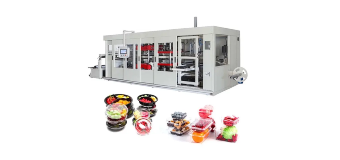
Plastic thermoforming is a widely used method in manufacturing packaging products, containers, and other plastic components. One of the most popular configurations of thermoforming machines is the four-station plastic thermoforming machine, which enhances production efficiency and automates the manufacturing process. These machines are ideal for high-volume production runs and can produce complex plastic parts with great precision. In this article, we will discuss the features of four-stationplastic thermoforming machines, why they are beneficial for manufacturers, and how they improve the overall thermoforming process.
What is a Four-Station Plastic Thermoforming Machine?
A four-station plastic thermoforming machine refers to a thermoforming system with four distinct stations, each performing a specific task during the production process. The machine’s ability to perform multiple steps in a continuous sequence — from sheet loading to forming, cutting, and stacking — significantly enhances productivity and reduces the need for manual labor.
In a four-station thermoforming machine, each of the four stations is designed to carry out a specific function. These stations usually include:
Sheet Loading / Feeding & Heating Station
Forming (Molding) Station
Punching / Cutting / Trimming Station
Stacking / Ejection Station
The advantage of having multiple stations is that while one part is being formed, another part is in the process of heating, and another part is being cut or stacked, ensuring that production runs smoothly and efficiently.
Why Four Stations? The Workflow in a Four-Station Thermoforming Machine
The four stations in the machine work together in a synchronized manner. Each station is optimized for a specific part of the thermoforming process, and the steps occur continuously, which improves efficiency and speeds up production.
1. Sheet Loading, Feeding & Heating Station
In the first station, a plastic sheet is loaded into the machine. The sheet is then heated to a temperature that makes it pliable and ready for forming. Typically, the sheet is heated using infrared heating elements that ensure uniform heat distribution across the entire surface.
Why It Matters:
The quality of the heating process is crucial to the thermoforming process. The plastic sheet must be heated to the correct temperature — not too hot (which can degrade the material) and not too cool (which can result in incomplete forming). The heating station ensures that the sheet is properly prepared for the molding process, making this step critical for achieving high-quality formed products.
2. Forming (Molding) Station
Once the plastic sheet is heated, it is moved to the forming station. This is where the sheet is shaped into the desired product using a mold. The heated sheet is either pressed into the mold with pressure or sucked into the mold using a vacuum (or both).
Why It Matters:
The forming station is essential for shaping the product with high precision. This step is where the geometry of the part is created, whether it’s a simple flat surface or a complex 3D design with deep draws. The precision of this station directly impacts the quality and consistency of the final product.
The forming station may be equipped with dual-pressure systems that apply both vacuum and pressure to ensure that the sheet fully conforms to the mold. This combination of vacuum and pressure ensures even material distribution and minimizes defects.
3. Punching, Cutting, or Trimming Station
After the sheet is formed, the excess material (known as "flash") around the edges of the part is trimmed or cut off. This step is done in the cutting or punching station, which removes the unwanted material and separates the formed product from the rest of the sheet. Depending on the design, this may involve using automated trimming knives, rotary cutting tools, or die-cutting systems.
Why It Matters:
This station ensures that the final product has clean, smooth edges and is separated from the rest of the material. It also minimizes material waste, which is crucial for keeping production costs low and ensuring that the thermoforming process is as efficient as possible. Proper trimming is essential for meeting product quality standards, especially for products with precise dimensions.
4. Stacking / Ejection Station
In the final station, the finished parts are collected, stacked, and prepared for packaging or further processing. The formed products are either ejected from the mold using ejector pins or mechanical arms, or they may be stacked automatically onto trays for packaging. This step also involves the removal of any remaining scrap or flash material.
Why It Matters:
The ejection and stacking process is essential for streamlining post-production handling. A smooth ejection process ensures that parts are not damaged when removed from the mold. Additionally, automated stacking helps organize the finished products, making it easier to handle, inspect, and prepare for shipping.
Key Features of Four-Station Thermoforming Machines
Now that we have an understanding of the four stations, let’s delve into the key features that make these machines efficient and beneficial for manufacturers.
1. Increased Production Efficiency
The primary benefit of a four-station thermoforming machine is its ability to run multiple processes simultaneously, improving overall production efficiency. While one part is being molded, another can be heated, another can be trimmed, and another can be stacked. This simultaneous operation reduces the overall cycle time and maximizes the throughput of the machine.
Why It Matters:
Increased efficiency leads to higher productivity, which is essential for manufacturers who need to produce large volumes of products quickly. Shorter cycle times also reduce the wear and tear on machines, helping to prolong their lifespan.
2. Automation and Reduced Labor Costs
Four-station thermoforming machines are typically highly automated, with minimal need for manual intervention. The integration of robotics, automated material handling systems, and advanced control systems allows for precise operation with little human input.
Why It Matters:
Automation reduces labor costs, which is especially important in industries where margins are tight. It also helps reduce human error, leading to more consistent and accurate production. Manufacturers can scale production without needing to significantly increase labor costs.
3. Versatility in Product Design
The four-station thermoforming machine allows for the production of a wide variety of plastic products, from simple trays and containers to more complex items with intricate geometries. The ability to produce products with deep draws, complex contours, and custom shapes makes the machine versatile and adaptable to different packaging needs.
Why It Matters:
Manufacturers can produce different product designs without needing multiple machines or extensive tooling changes. This versatility makes the four-station thermoforming machine ideal for industries with diverse product lines or frequent design changes.
4. Reduced Scrap and Material Waste
Four-station machines are designed to optimize material use by cutting and trimming excess material precisely. Many models also incorporate systems that automatically recycle trim and scrap back into the system for reuse.
Why It Matters:
Minimizing waste not only reduces material costs but also makes the production process more environmentally friendly. Efficient material usage ensures that manufacturers can meet sustainability goals while maintaining profitability.
5. High Precision and Consistency
These machines offer high precision in forming and trimming, ensuring that the final products are consistent in size and shape. Advanced control systems monitor and adjust parameters during the production process to ensure that each product meets the required specifications.
Why It Matters:
Consistency in production is crucial for industries that require precise packaging, such as the medical, food, and electronics sectors. High precision ensures that parts fit together correctly, packaging is secure, and product quality remains high.
6. Flexible Material Handling
Four-station thermoforming machines are compatible with a wide range of thermoplastic materials, including PP, PET, PVC, and PS. This flexibility allows manufacturers to choose the material that best suits their product needs, whether for durability, clarity, or cost-effectiveness.
Why It Matters:
The ability to work with various materials makes these machines adaptable to different industries and product types. Manufacturers can adjust material choice based on performance needs or cost considerations.
7. Compact Design for Efficient Use of Space
Despite their advanced capabilities, four-station thermoforming machines are often designed to be compact and space-efficient. This makes them ideal for environments where space is limited but high throughput is still required.
Why It Matters:
A compact machine design allows manufacturers to increase production capacity without needing to expand their facility. This is particularly useful for businesses that operate in smaller or more constrained manufacturing spaces.
Conclusion
The four-station plastic thermoforming machine offers a range of features that make it ideal for high-volume production of plastic packaging and containers. With automation, increased production efficiency, and the ability to handle complex designs, these machines provide manufacturers with the tools they need to produce high-quality products while reducing labor costs and material waste.
Wenzhou Yicai Machinery Technology Co., Ltd. is one of the leading companies that designs and manufactures advanced four-station thermoforming machines. Their expertise in thermoforming technology ensures that businesses can meet their production needs efficiently and economically. With the increasing demand for faster, more flexible, and cost-effective manufacturing solutions, four-station thermoforming machines continue to be a crucial asset for manufacturers in various industries.


