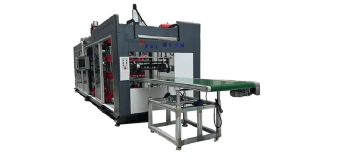
Designing a multi-cavity mold for plastic thermoforming is a critical task that requires careful planning and precision. The ability to produce multiple identical parts in a single thermoforming cycle is a key advantage in high-volume production. Multi-cavity molds offer increased efficiency, reduced per-part cost, and enhanced consistency in the final product. However, the design process for multi-cavity molds is more complex than single-cavity molds and requires consideration of several critical factors, including material flow, thermal management, mold geometry, and overall mold integrity.
In this article, we will explore the essential steps and key considerations for designing thermoforming multi-cavity molds. We will discuss the design process, common challenges, and best practices to ensure a high-quality mold that enhances production efficiency.
What Is a Thermoforming Multi-Cavity Mold?
In thethermoforming process, a plastic sheet is heated to a pliable temperature, then formed over or into a mold using vacuum, pressure, or both. Once formed, the plastic part is cooled and trimmed to the final shape. In a multi-cavity mold, several identical cavities are included in one mold, allowing for multiple parts to be formed simultaneously. This approach is highly effective for high-volume production, as it increases the output per cycle without increasing the cycle time proportionally.
Designing a multi-cavity mold is essential when producing large quantities of parts, such as disposable cups, food containers, or packaging. However, creating a mold with multiple cavities requires careful consideration to ensure that all parts are produced with uniform quality and precision.
Key Principles in Multi-Cavity Mold Design
Before diving into the detailed steps, it’s essential to understand the core principles that drive the success of multi-cavity mold design:
Balanced Material Flow: The material must flow evenly into all cavities. Inconsistent flow can lead to variations in part thickness, incomplete forming, or defects in the final product.
Uniform Heating and Cooling: All cavities need to receive equal amounts of heat and cooling to ensure that each part has the same finish and dimensional accuracy.
Mold Rigidity and Precision: The mold should be rigid enough to withstand repeated heating and cooling cycles without warping or bending. The tolerances must be tight to ensure that all parts are produced with the desired quality.
Ejection and Demolding: The design should facilitate easy ejection of parts without damaging them or the mold. This includes ensuring that the parts are removed simultaneously or sequentially without causing interference.
By following these principles, you can create a multi-cavity mold that is efficient, durable, and produces high-quality parts consistently.
Step-by-Step Guide to Designing a Multi-Cavity Thermoforming Mold
1. Define Product Requirements
The first step in designing a multi-cavity mold is to clearly define the product that will be produced. This includes:
Part geometry: What shape is the part? Is it simple or complex? Will it require additional features, such as embossing, logos, or texture?
Wall thickness: What is the required thickness of the part, and is it consistent throughout? Thin walls require more precise control over material flow.
Dimensions: What are the exact dimensions of the part, including any tolerances? The mold must be designed to accommodate these specifications.
Material: What type of plastic will be used? Different materials may have varying requirements in terms of heating, cooling, and forming.
Production volume: How many parts need to be produced per cycle? This will help determine the number of cavities needed in the mold.
Clarifying these product requirements will guide the design process and ensure that the mold meets the necessary performance criteria.
2. Plan Cavity Layout and Spacing
Once the product specifications are clear, the next step is to design the cavity layout. The arrangement of cavities plays a critical role in ensuring that the material flows evenly into each cavity, and the parts are formed uniformly. Key considerations include:
Cavity arrangement: Decide how many cavities are needed and how they will be arranged in the mold. The layout should maximize the number of cavities while maintaining even spacing between them. Common arrangements include linear, rectangular, or circular patterns.
Cavity spacing: Ensure that cavities are spaced sufficiently apart to prevent interference during the forming process. The spacing should also account for shrinkage allowances, as plastic parts tend to shrink slightly during cooling.
Alignment: Proper alignment is essential to ensure that each cavity is perfectly positioned and that the sheet feeds evenly across the mold. Misalignment can lead to defects in the molded parts.
Mold size: The mold should be designed to fit within the available machine’s platen size. The overall size of the mold, as well as the cavity layout, must be optimized to make efficient use of the available space.
The goal is to create a cavity layout that maximizes production efficiency while ensuring that the material flows evenly into all cavities, producing identical parts.
3. Design the Runner, Vacuum, and Venting System
The next critical design element is the runner, vacuum, and venting system. These components ensure that the plastic sheet flows evenly into the mold cavities, and any air or gas is evacuated efficiently during the forming process. Proper material flow and venting are essential for producing high-quality parts.
Vacuum ports: Vacuum ports are used to pull the heated plastic sheet into the mold. It is essential that the vacuum ports are sized appropriately for each cavity and placed in a way that ensures even distribution of vacuum pressure. Poor vacuum distribution can result in incomplete forming, air pockets, or uneven thickness.
Runner system: In some cases, the mold may use a runner system to help distribute the material evenly across multiple cavities. The runner system should be designed to minimize material wastage and ensure that each cavity receives the right amount of material.
Venting system: Proper venting is critical to remove any trapped air from the mold. If the air is not evacuated, it can cause defects such as bubbles, wrinkles, or incomplete forming. The venting system should be designed to allow the air to escape without affecting the part’s surface finish.
Designing an effective runner, vacuum, and venting system requires careful planning and testing to ensure that all cavities are filled uniformly and that air is removed efficiently.
4. Mold Material Selection and Structure
The materials chosen for the mold will significantly impact its durability, accuracy, and performance. A high-quality mold material should be resistant to heat, wear, and corrosion. Common mold materials include:
Steel: Steel molds are strong, durable, and resistant to wear. They can withstand the repeated heating and cooling cycles required in thermoforming. Steel is ideal for high-volume production, though it is more expensive than aluminum.
Aluminum: Aluminum molds are lighter and more affordable than steel molds, but they are less durable. Aluminum is often used for low-to-medium production volumes where cost is a significant factor.
Composite materials: Some molds use composite materials, which are a combination of metal and other materials, providing a balance between strength and cost.
In addition to selecting the right material, the mold should be designed to provide sufficient rigidity and support to prevent warping or deformation. The mold structure must withstand the pressures exerted during forming and cooling without compromising accuracy or integrity.
5. Thermal Management: Heating and Cooling Design
A crucial part of mold design is ensuring proper thermal management. The mold must heat and cool the plastic sheet uniformly to ensure the final product has consistent dimensions and quality. This involves:
Heating design: The mold’s heating system should ensure that the plastic sheet reaches the optimal temperature for forming. The heating system must be uniform to prevent hot or cold spots, which can lead to uneven part thickness.
Cooling channels: After the plastic is formed, it must be cooled quickly and evenly to solidify in the mold. Cooling channels within the mold are typically filled with water or other cooling agents to remove heat from the mold and the part. The cooling system must be designed to ensure that the plastic solidifies uniformly in all cavities.
Proper thermal management ensures that the thermoforming process runs smoothly and efficiently, minimizing defects and improving cycle times.
6. Ejection and Trimming
After forming and cooling, the molded parts must be ejected from the mold. In a multi-cavity mold, this must happen simultaneously or sequentially without damaging the parts or interfering with the others. The ejection system typically includes ejector pins, air blast systems, or mechanical devices designed to push the parts out of the mold.
Trimming is also an essential part of the process, as excess material around the edges of the molded part must be cut away. The design must allow for efficient trimming without damaging the parts.
7. Maintenance and Durability
Lastly, the mold should be designed for easy maintenance and long-term durability. This includes:
Access for cleaning and inspection: Regular maintenance is required to ensure that the mold remains in good condition. The design should allow for easy access to the mold for cleaning, inspection, and repairs.
Wear resistance: Multi-cavity molds undergo high wear and tear during production, so the mold material and design must be robust enough to withstand repeated cycles without significant degradation.
Conclusion
Designing a thermoforming multi-cavity mold requires careful planning, precise engineering, and a deep understanding of both the thermoforming process and the product being produced. By addressing key design considerations such as cavity layout, material flow, thermal management, mold structure, and ejection systems, it is possible to create efficient and high-quality molds that maximize production output while maintaining consistent part quality.
Whether you are producing disposable cups, food containers, or any other thermoformed product, a well-designed multi-cavity mold can significantly improve the efficiency of your manufacturing process and reduce production costs.


