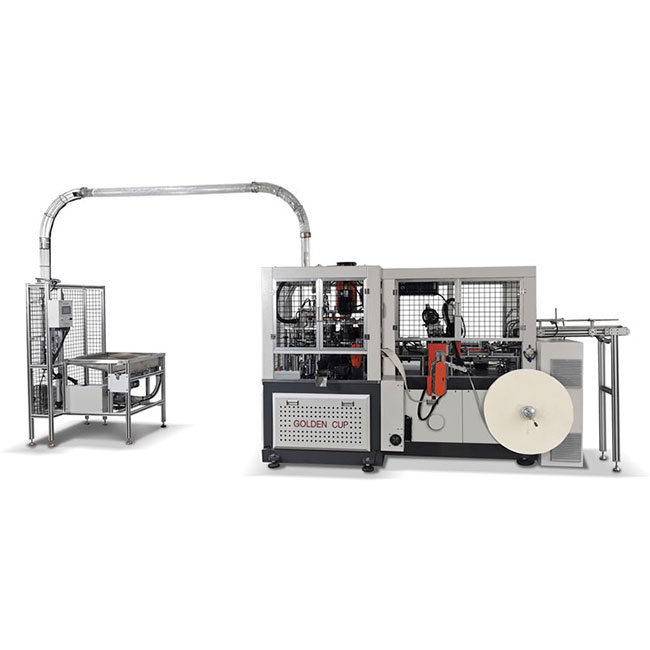
Ever wondered how everyday plastic products get their shape? Thermoforming is the answer. It's a process that involves heating a plastic sheet until it's pliable, then shaping it over a mold. The cooling system in a thermoforming machine is crucial. It solidifies the plastic, ensuring it maintains its shape and quality. In this post, you'll learn about the role of cooling systems in thermoforming machines, their types, and their impact on efficiency and product quality.
Understanding the Thermoforming Process
Heating Phase
The heating phase is the first and crucial step in thermoforming. Here, the plastic sheet is heated until it becomes soft and pliable. The temperature must be controlled carefully to ensure the sheet reaches the right flexibility without overheating. If it’s too cold, the plastic won’t mold well; too hot, it could degrade or become uneven.
Different plastics like polyethylene, polypropylene, and polyvinyl chloride need different heating times and temperatures. For instance, polyethylene may require a lower temperature than polyvinyl chloride. Our thermoforming machines come equipped with precise heating controls to handle these variations, ensuring consistent results every time.
Moulding Phase
Once heated, the plastic sheet moves to the moulding phase. The soft sheet is shaped over or into a mould using vacuum, pressure, or mechanical means. The mould’s design deeply influences the final product’s shape and quality. Features like draft angles help with easy removal, while surface finishes affect the product’s texture.
Materials such as aluminum or steel are common for moulds, chosen for their heat conduction and durability. Our thermoforming machines integrate moulds designed to optimize heat transfer and product release, reducing defects and improving cycle times.
Cooling Phase
After shaping, the plastic must cool to solidify and hold its form. This cooling phase is vital; without proper cooling, the product might warp, shrink, or lose detail. Cooling also impacts production speed—faster cooling means quicker cycles and higher output.
Effective cooling prevents deformation and maintains dimensional stability. Our thermoforming machines feature advanced cooling systems that use air, liquid, or hybrid methods to cool parts evenly and efficiently. This ensures products keep their shape and quality while production runs at optimal speed.
Summary Table: Key Phases in Thermoforming
| Phase | Purpose | Key Considerations | Role of Our Machines |
| Heating | Soften plastic sheet | Precise temperature control | Accurate heating elements |
| Moulding | Shape plastic over mould | Mould design, material choice | High-quality mould integration |
| Cooling | Solidify and stabilize product | Even cooling, speed, temperature | Efficient cooling systems |
Understanding these phases helps you appreciate how our thermoforming machines deliver quality and efficiency. Each step is carefully controlled to produce strong, detailed, and consistent plastic parts.
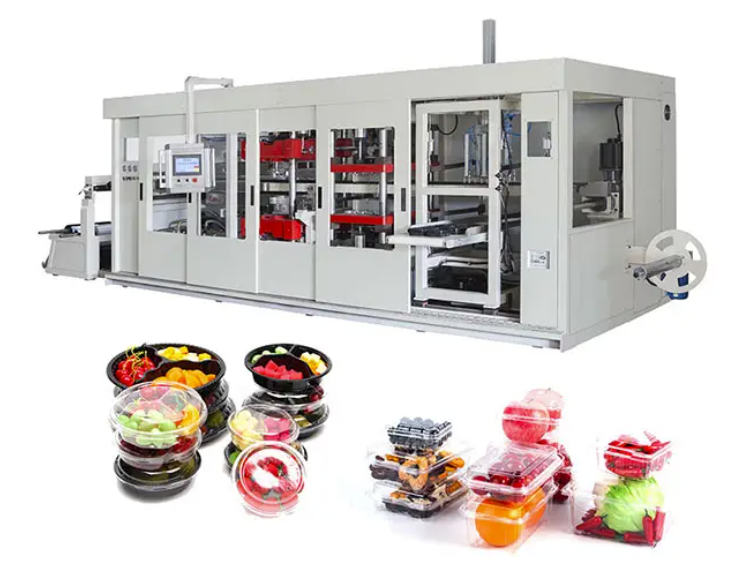
Importance of the Cooling System
Role in Solidifying Formed Sheets
After the plastic sheet is heated and shaped in a thermoforming machine, the cooling system takes center stage. Its main job is to solidify the formed plastic quickly and evenly. When plastic cools properly, it hardens into the shape of the mold, locking in all the details and dimensions. If cooling is uneven or slow, the plastic may warp, shrink, or lose its shape, causing defects that affect the product’s usability and appearance.
Think of it like setting jelly in a mold: if one side cools faster, the jelly may crack or deform. The same principle applies here. Our thermoforming machines use advanced cooling systems designed to deliver uniform temperature control across the entire formed sheet. This precision ensures every product comes out strong and true to design.
Impact on Product Quality and Integrity
Cooling doesn’t just solidify the plastic; it directly influences product quality. Fast, uniform cooling reduces the time the plastic stays soft, which lowers the chances of surface defects such as warping, bubbling, or uneven textures. This leads to smoother finishes and better dimensional accuracy.
Moreover, proper cooling enhances the mechanical properties of the product. When the plastic solidifies optimally, it gains strength and durability, resisting wear and tear over time. For example, packaging containers made on our machines maintain their shape and protect contents reliably thanks to our efficient cooling technology.
Influence on Production Speed
In manufacturing, time is money. The cooling system’s efficiency directly impacts how fast a thermoforming machine can produce parts. Faster cooling means shorter cycle times, allowing more products to be made in less time. This boost in production speed improves overall throughput and reduces operational costs.
Our thermoforming machines incorporate cooling systems that can reduce mold temperature quickly—sometimes by over 70% within 25 seconds using pressurized air. This rapid cooling capability helps keep production lines moving smoothly and meets high-volume demands without sacrificing quality.
Summary Table: Cooling System Roles in Thermoforming
| Role | Effect on Process | Benefit |
| Solidifying Formed Sheets | Locks in shape and details | Reduces warping and deformation |
| Enhancing Product Quality | Minimizes surface defects and improves strength | Produces durable, attractive products |
| Increasing Production Speed | Shortens cycle times | Boosts output and cost efficiency |
In conclusion, the cooling system plays a crucial role in thermoforming machines. It ensures formed sheets solidify correctly, maintains product quality and integrity, and speeds up production. Our machines are equipped with state-of-the-art cooling technologies tailored to meet these needs. Investing in a thermoforming machine with an efficient cooling system means better products faster, supporting your manufacturing goals every step of the way.
Types of Thermoforming Cooling Systems
In thermoforming, cooling is crucial for shaping plastic sheets properly. Different cooling systems exist to meet various production needs. Each type offers unique benefits, affecting product quality, cycle time, and energy use. Let's explore the main types used in thermoforming machines, including those integrated in our advanced equipment.
Air Circulation Cooling
Air circulation cooling relies on fans or blowers to move air around the formed plastic or mold. This airflow helps remove heat gradually, solidifying the plastic evenly.
Our thermoforming machines use optimized air circulation systems, ensuring consistent airflow that prevents hot spots and uneven cooling. This helps maintain product integrity while keeping energy consumption low.
Liquid Cooling Systems
Liquid cooling involves circulating water or coolant through channels embedded in the mold or around the formed sheet.
How it works: Coolant absorbs heat rapidly from the mold, transferring it away efficiently.
Best for: High-speed production lines or thick plastic parts needing quick cooling.
Advantages:
Limitations:
Our thermoforming machines feature precision-engineered liquid cooling channels, designed to maximize heat transfer. This allows faster cycle times and improved product consistency, especially for demanding applications.
Hybrid Cooling Systems
Hybrid systems combine air and liquid cooling to leverage benefits from both methods.
How it works: Liquid coolant rapidly lowers mold temperature, followed by air circulation to finalize cooling.
Best for: Complex parts requiring controlled cooling rates to avoid warping.
Advantages:
Limitations:
Our machines incorporate hybrid cooling options tailored to specific production goals. This flexibility helps manufacturers optimize quality and throughput without compromising energy efficiency.
Comparison Table: Cooling System Types
| Cooling Type | Cooling Speed | Energy Use | Maintenance | Ideal Applications |
| Air Circulation | Moderate | Low | Low | Heavy-gauge parts, low-speed |
| Liquid Cooling | Fast | Moderate | Moderate | High-speed, thick parts |
| Hybrid Cooling | Fast to Moderate | Moderate | Moderate to High | Complex shapes, mixed needs |
Choosing the right cooling system depends on your product specifications, production speed, and budget. Our thermoforming machines come equipped with customizable cooling solutions, ensuring you get the best fit for your manufacturing process. Proper cooling not only preserves product shape and quality but also boosts production efficiency, making it a critical component in thermoforming success.
Impact on Efficiency and Quality
Efficiency Improvements
Cooling systems in thermoforming machines play a huge role in boosting production efficiency. Rapid cooling shortens the cycle time, meaning more parts can be produced in less time. For example, some advanced cooling systems can reduce mold temperature by over 70% in just 25 seconds using pressurized air. This quick heat removal speeds up the entire process.
Efficient cooling also prevents bottlenecks on the production line by ensuring each formed sheet solidifies evenly and fast. This means fewer delays waiting for parts to cool before the next cycle begins. Our thermoforming machines come equipped with optimized cooling systems designed to maximize throughput without sacrificing quality.
Energy consumption is another key factor. Modern cooling systems use precise temperature controls to avoid wasting energy. By targeting only the necessary cooling zones and adjusting airflow or coolant flow rates, these systems reduce overall power use. This not only lowers operational costs but also aligns with sustainability goals many manufacturers now prioritize.
Quality Enhancements
The quality of thermoformed products depends heavily on how well the cooling system performs. Uniform cooling prevents warping, shrinkage, and surface defects such as bubbles or uneven textures. This leads to smoother finishes and more accurate dimensions.
Proper cooling also strengthens the product’s mechanical properties. When plastic solidifies evenly, internal stresses are minimized, improving durability and resistance to wear. For instance, packaging containers made on our machines maintain their shape and protect contents reliably due to superior cooling technology.
Furthermore, controlled cooling helps maintain consistent wall thickness and detail sharpness, which are vital for functional and aesthetic reasons. This is especially important in industries like food packaging or medical device manufacturing, where precision matters.
Energy Consumption Considerations
While fast cooling is desirable, energy use must remain efficient. Cooling systems that run continuously at high power can increase costs and environmental impact. That’s why our thermoforming machines integrate smart cooling controls.
These controls monitor mold temperature, product type, and cycle speed to adjust cooling intensity dynamically. For example, during slower production runs, cooling power can be reduced to save energy without compromising quality. Conversely, during high-speed runs, cooling ramps up to maintain cycle time.
Choosing the right cooling method—air, liquid, or hybrid—also affects energy consumption. Air circulation cooling generally uses less energy but cools slower. Liquid cooling offers faster heat transfer but requires pumps and plumbing, increasing energy use. Hybrid systems balance these factors, optimizing both speed and power efficiency.
Table: Cooling System Impact on Efficiency and Quality
| Aspect | Impact | Benefit |
| Faster Cooling | Shorter cycle times | Increased production output |
| Uniform Cooling | Reduced warping and surface defects | Higher product quality |
| Controlled Cooling | Minimized internal stresses | Improved durability |
| Smart Energy Use | Dynamic adjustment of cooling power | Lower operational costs |
Maintenance of Cooling Systems
Regular Maintenance Practices
Keeping the cooling system in top shape is key for smooth thermoforming machine operation. Regular maintenance prevents breakdowns and ensures consistent cooling performance. For air cooling systems, checking fans and blowers is crucial. Dust and debris can block airflow, reducing cooling efficiency. Cleaning fan blades and filters regularly helps maintain steady air circulation.
In liquid cooling systems, water quality is a major concern. Hard water can cause scale buildup inside cooling channels, restricting flow and heat transfer. Using water softeners or demineralized water can prevent this. Periodic flushing of the cooling lines removes sediment and corrosion deposits. Inspect hoses and fittings often to catch leaks early, avoiding costly damage.
Hybrid cooling systems demand attention to both air and liquid components. Maintenance schedules should cover fan cleaning and coolant quality checks. Monitoring pumps and valves ensures coolant circulates properly. Our thermoforming machines come with easy-access panels and smart monitoring systems to simplify these tasks, minimizing downtime.
Temperature Control
Precise temperature control is vital for optimal cooling. Different plastics require different cooling rates to avoid defects. For example, polyethylene might tolerate faster cooling than polyvinyl chloride, which can develop internal stresses if cooled too quickly. Our thermoforming machines feature advanced temperature sensors and control units that adjust cooling intensity automatically based on the material and cycle stage.
Maintaining a consistent cooling temperature also protects the mold and machine parts. Sudden temperature fluctuations can cause thermal shock, leading to cracks or warping in molds. Using thermostatic controls and feedback loops, the cooling system keeps temperatures stable, extending mold life and ensuring product consistency.
Protecting Machine Components
Besides cooling the plastic, the system safeguards critical machine components. Heating elements, electrical circuits, and mechanical parts generate or absorb heat during operation. Without effective cooling, these components risk overheating, which causes premature wear or failure.
Our thermoforming machines integrate cooling pathways around these sensitive parts. Air or liquid cooling dissipates heat efficiently, maintaining safe operating temperatures. This protection reduces repair costs and prolongs machine lifespan. Additionally, regular inspection of cooling system parts—fans, pumps, pipes—helps identify wear before it causes damage.
Maintenance Checklist for Thermoforming Cooling Systems
| Task | Frequency | Purpose |
| Clean air filters and fans | Weekly to monthly | Ensure proper airflow and cooling |
| Flush liquid cooling channels | Quarterly | Remove scale and sediment buildup |
| Inspect hoses and fittings | Monthly | Detect leaks early |
| Monitor coolant quality | Monthly | Prevent corrosion and blockages |
| Check temperature sensors | Monthly | Maintain precise control |
| Examine pumps and valves | Quarterly | Ensure proper coolant circulation |
By following these maintenance practices, you keep your thermoforming machine’s cooling system efficient and reliable. Proper upkeep not only improves product quality but also reduces downtime and repair expenses. Investing time in maintenance today means smoother production tomorrow.
Our thermoforming machines come equipped with user-friendly cooling systems designed for easy maintenance. Plus, our support team is always ready to help you optimize your cooling system's performance. Keeping the cooling system in peak condition ensures your thermoforming process runs efficiently and produces high-quality parts every cycle.
Conclusion
Thermoforming cooling systems are vital for efficiency and quality. They solidify formed sheets, enhance product durability, and boost production speed. Future trends may include more energy-efficient and precise cooling technologies. Investing in advanced cooling systems, like those from Wenzhou Yicai Machinery Technology Co.LTD, ensures superior product quality and operational efficiency. Their machines offer customizable, cutting-edge cooling solutions that optimize manufacturing processes, making them an excellent choice for businesses seeking reliable thermoforming equipment.
FAQ
Q: What is the main purpose of the cooling phase in thermoforming?
A: The cooling phase solidifies the plastic, ensuring it holds the mold's shape and details without warping or defects.
Q: How does air circulation cooling work?
A: Air circulation cooling uses fans to move air over the plastic or mold, gradually removing heat to solidify the plastic evenly.
Q: Why is regular maintenance important for cooling systems?
A: Regular maintenance prevents breakdowns, maintains cooling efficiency, and ensures consistent product quality.
Q: What are the benefits of hybrid cooling systems?
A: Hybrid cooling systems offer balanced cooling speed and energy use, enhancing temperature control and product quality.


