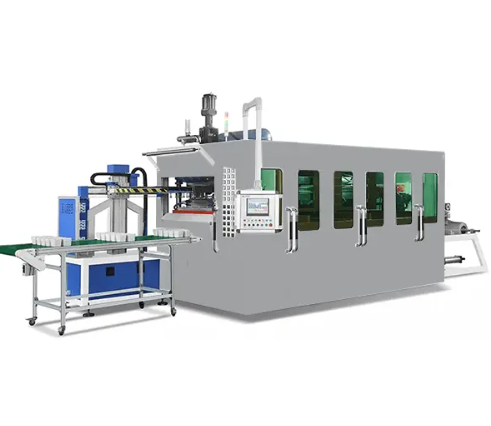
Thermoforming machines are a crucial part of the manufacturing process, particularly in industries that rely on plastic packaging and product creation. These machines use heat to mold plastic sheets into various shapes, making them essential for producing items like food containers, plastic cups, and lids. The thermoforming process has evolved significantly over the years, and today, it is used across multiple sectors, including food packaging, medical devices, and automotive parts. In this research paper, we will explore the fundamental workings of a Thermoforming Machine, its applications, and the different types available in the market.
Understanding the intricacies of thermoforming machines is essential for businesses looking to optimize their production processes. These machines offer versatility, cost-effectiveness, and high-speed production, making them a preferred choice for mass production. Additionally, advancements in technology have led to the development of multi-station thermoforming machines, which can handle more complex tasks and improve efficiency. In this paper, we will also discuss the various factors to consider when choosing a thermoforming machine, including material compatibility, machine speed, and energy efficiency.
The Thermoforming Process
Thermoforming is a manufacturing process that involves heating a plastic sheet until it becomes pliable and then forming it into a specific shape using a mold. The process can be broken down into several key steps:
Heating: The plastic sheet is heated to a temperature where it becomes soft and malleable.
Forming: The heated sheet is stretched over or into a mold, and air pressure or vacuum is applied to ensure the sheet conforms to the mold's shape.
Cooling: The formed plastic is cooled to retain its new shape.
Trimming: Excess material is trimmed away, leaving the final product.
Thermoforming machines can be categorized into two main types: vacuum forming and pressure forming. Vacuum forming uses a vacuum to pull the heated plastic sheet against the mold, while pressure forming uses additional air pressure to achieve more detailed and complex shapes. Both methods are widely used, but the choice between them depends on the specific requirements of the product being manufactured.
Types of Thermoforming Machines
1. Single-Station Thermoforming Machines
Single-station thermoforming machines are the most basic type of thermoforming equipment. These machines are typically used for simple, low-volume production tasks. The process involves heating a plastic sheet and forming it over a single mold. While these machines are cost-effective and easy to operate, they are not suitable for complex or high-volume production.
2. Multi-Station Thermoforming Machines
Multi-station thermoforming machines, such as the Multi-station Thermoforming Machine, are designed for high-speed, high-volume production. These machines can handle multiple tasks simultaneously, such as heating, forming, and trimming, which significantly improves production efficiency. Multi-station machines are commonly used in industries that require mass production of complex plastic products, such as food packaging and automotive components.
3. Pressure Thermoforming Machines
Pressure thermoforming machines use air pressure to form plastic sheets into detailed and intricate shapes. These machines are ideal for creating products with fine details, such as medical device components and automotive parts. Pressure thermoforming offers greater precision compared to vacuum forming, making it a preferred choice for industries that require high-quality, detailed products.
4. Vacuum Thermoforming Machines
Vacuum thermoforming machines are widely used for producing simple, large-volume products such as food trays, plastic cups, and lids. These machines use a vacuum to pull the heated plastic sheet against the mold, creating the desired shape. Vacuum thermoforming is a cost-effective method for producing large quantities of plastic products, making it a popular choice in the packaging industry.
Applications of Thermoforming Machines
Thermoforming machines are used in a wide range of industries due to their versatility and efficiency. Some of the most common applications include:
Food Packaging: Thermoforming machines are widely used in the food packaging industry to create containers, trays, and lids for various food products. The ability to produce lightweight, durable, and cost-effective packaging makes thermoforming an ideal solution for food manufacturers.
Medical Devices: In the medical industry, thermoforming machines are used to create sterile packaging for medical devices, as well as components for medical equipment. The precision and cleanliness of the thermoforming process make it suitable for producing high-quality medical products.
Automotive Parts: Thermoforming is also used in the automotive industry to create interior and exterior components, such as dashboards, door panels, and protective covers. The process allows for the production of lightweight, durable parts that meet the stringent requirements of the automotive sector.
Consumer Goods: Thermoforming machines are used to produce a wide range of consumer goods, including plastic cups, lids, and containers. The ability to create custom shapes and sizes makes thermoforming a versatile solution for manufacturers of consumer products.
Factors to Consider When Choosing a Thermoforming Machine
When selecting a thermoforming machine, several factors must be taken into account to ensure optimal performance and efficiency. These factors include:
Material Compatibility: Different thermoforming machines are designed to work with specific types of plastic materials. It is essential to choose a machine that is compatible with the materials you intend to use, such as PET, PVC, or PP.
Machine Speed: The speed of the machine is a critical factor, especially for high-volume production. Multi-station thermoforming machines, for example, offer faster production rates compared to single-station machines.
Energy Efficiency: Energy consumption is an important consideration, particularly for businesses looking to reduce their environmental impact. Modern thermoforming machines are designed to be more energy-efficient, helping manufacturers lower their operational costs.
Automation: Automation features, such as automatic loading and unloading, can significantly improve production efficiency and reduce labor costs. Fully automated thermoforming machines are ideal for large-scale production.
Conclusion
Thermoforming machines play a vital role in the manufacturing industry, offering a versatile and cost-effective solution for producing a wide range of plastic products. From food packaging to medical devices, these machines are used across various sectors to create high-quality, durable products. Understanding the different types of thermoforming machines and their applications is essential for businesses looking to optimize their production processes. Whether you are looking for a Plastic Cup Thermoforming Machine or a multi-station machine, selecting the right equipment can significantly impact your production efficiency and product quality.
In conclusion, the advancements in thermoforming technology have made it easier for manufacturers to produce complex, high-quality products at a lower cost. By choosing the right thermoforming machine and optimizing your production process, you can stay competitive in today's fast-paced manufacturing environment. For businesses looking to invest in thermoforming technology, it is essential to consider factors such as material compatibility, machine speed, and energy efficiency to ensure long-term success.
If you have any questions, please contact us via email or telephone and we will get back to you as soon as possible.