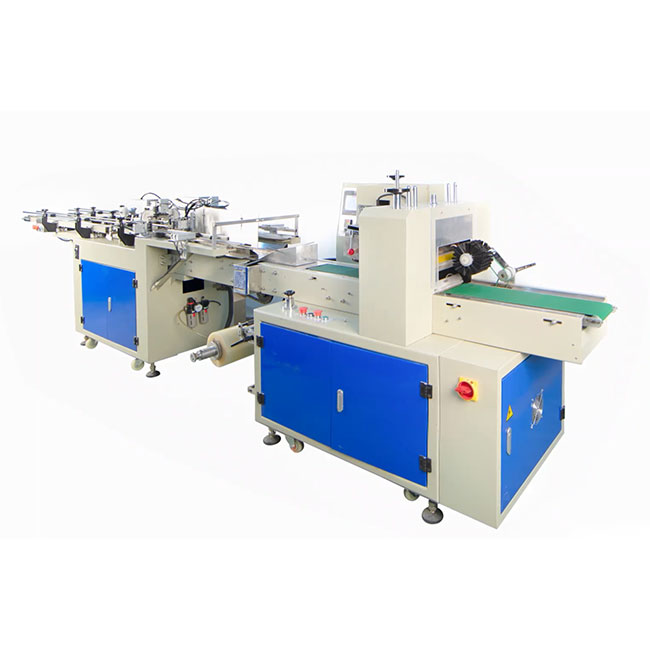
Is thermoforming machinery the future of manufacturing? With its ability to efficiently create detailed plastic parts, thermoforming machinery is revolutionizing modern industries. This article delves into its growing importance and explores the advancements shaping its future. You'll learn about new techniques, automation, and material innovations driving this technology forward.
Advancements in Thermoforming Techniques
Thermoforming has come a long way, and the latest advancements are making it smarter and more efficient. Two key methods—pressure forming and vacuum forming—are at the heart of this progress. Each offers unique benefits, and together they help manufacturers meet ever-changing demands.
Pressure Forming and Vacuum Forming
Pressure forming uses high pressure, often between 80 to 100 psi, to push heated plastic sheets tightly against molds. This technique produces parts with sharper details and finer finishes, similar to injection molding but at a lower cost and faster pace. It’s perfect for complex shapes that need precision, like automotive dashboards or medical device housings.
On the other hand, vacuum forming gently pulls the plastic sheet over the mold using suction. It’s great for simpler shapes and larger parts. Vacuum forming is faster and more cost-effective for high-volume runs of less detailed items, such as packaging trays or protective covers.
By combining these methods, manufacturers can choose the best fit for their product needs, balancing detail, speed, and cost.
Enhanced Precision and Efficiency
New machines and technologies have pushed thermoforming precision to the next level. Advanced temperature controls ensure plastic sheets heat evenly, preventing weak spots or warping. This leads to consistent thickness and better part quality.
Robotic trimming systems have also improved efficiency. Robots can quickly and accurately cut formed parts, reducing waste and speeding up production. Automated scanning technologies check parts for defects in real-time, allowing immediate corrections.
These innovations reduce errors and downtime, helping manufacturers deliver high-quality products faster than ever.
Role of Custom Solutions
Customization is a big trend in thermoforming. Every product has unique needs, whether it’s a specific shape, finish, or material. Modern thermoforming companies offer tailored solutions, adjusting molds, materials, and processes to fit client demands.
For example, some manufacturers provide molded-in color options, eliminating extra painting steps. Others develop custom tooling for unusual designs or integrate multi-step processes like assembly and finishing.
This flexibility means thermoforming can serve a wide range of industries—from automotive and medical to food packaging and electronics—while keeping costs and lead times low.
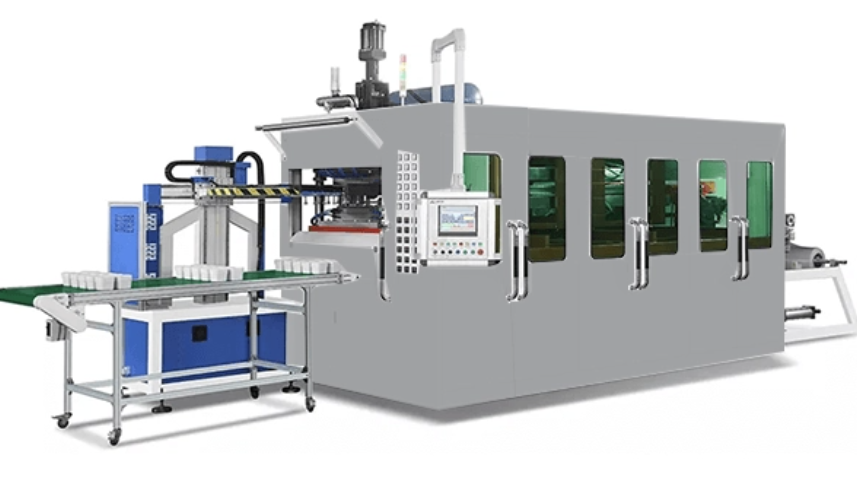
Efficiency Gains through Automation and Robotics
Automation and robotics are reshaping thermoforming machinery in powerful ways. They bring speed, precision, and consistency that manual processes simply can’t match. This shift not only boosts production rates but also raises product quality, helping manufacturers meet tighter deadlines and higher standards.
Robotic Trimming and Scanning Technologies
Robotic trimming has become a game-changer in thermoforming. These robots use multi-axis arms to trim formed plastic parts with incredible accuracy. They handle complex shapes and contours faster than human workers, reducing errors and material waste. For example, 6-axis robotic systems can perform intricate cuts and routing that were once time-consuming or impossible by hand.
Scanning technologies complement trimming by inspecting parts in real-time. Automated scanners detect defects such as warping, uneven thickness, or surface imperfections immediately after forming. This instant feedback allows quick adjustments, minimizing downtime and scrap rates. Together, robotic trimming and scanning form a quality control loop that keeps production smooth and efficient.
Impact on Production Speed and Quality
Automation dramatically speeds up thermoforming cycles. Robots work continuously without fatigue, trimming parts seconds after they come off the mold. This reduces bottlenecks and increases throughput. Plus, consistent robotic movements mean every part is cut to exact specifications, improving uniformity across batches.
The improved precision also reduces the need for secondary finishing processes like sanding or manual trimming. Manufacturers save time and labor costs while delivering higher-quality products. This efficiency gain is especially vital in industries like automotive or medical devices, where tight tolerances and flawless finishes are critical.
Integration with Existing Systems
One key advantage of modern automation is its adaptability. Robotic systems can often be integrated into existing thermoforming lines without a full overhaul. Modular robotic cells can be added to handle trimming, inspection, or part handling, allowing manufacturers to upgrade step-by-step.
Integration with digital controls and data systems further enhances efficiency. Robots can communicate with thermoforming machines to synchronize operations, track production metrics, and enable predictive maintenance. This connected approach maximizes uptime and resource use, creating a smarter, more agile manufacturing environment.
Material Innovations in Thermoforming
Material innovation is a driving force shaping the future of thermoforming machinery. New materials improve product performance, reduce environmental impact, and open doors to exciting applications. Let’s explore some key trends in materials that are transforming this industry.
Use of Recycled and Biodegradable Plastics
Recycling and sustainability are top priorities. Thermoforming now often uses recycled plastics, such as recycled PET and polypropylene. These materials help reduce waste and lower production costs while maintaining high quality. For example, recycled plastics can achieve glossy or metallic finishes without extra processing, saving time and energy.
Biodegradable plastics are also gaining ground. Made from renewable resources like plant starches, they break down naturally over time. This helps combat plastic pollution, especially in packaging and disposable products. Some biodegradable materials work well in thermoforming, offering the same strength and flexibility as traditional plastics but with a greener footprint.
Flame-Resistant and Weather-Resistant Materials
Safety and durability matter. Flame-resistant materials are critical in automotive, electronics, and building industries. These plastics resist ignition and slow fire spread, protecting users and property. Weather-resistant plastics withstand UV rays, moisture, and temperature extremes, making them ideal for outdoor applications like vehicle parts and equipment housings.
Thermoforming machines now handle these advanced polymers, ensuring parts meet strict safety and longevity standards. Using these materials extends product life and reduces the need for replacements, contributing to sustainability.
Environmental Impact and Sustainability
Thermoforming is becoming more eco-friendly overall. Manufacturers focus on reducing material waste during production by improving process precision and adopting automation. Using thinner sheets without sacrificing strength also cuts raw material use.
Energy-efficient heating methods and machines further lower carbon footprints. Some companies integrate renewable energy sources into their operations, enhancing sustainability.
Additionally, recycling scrap and offcuts back into production loops minimizes landfill waste. This circular approach benefits the environment and cuts costs.
Emerging Applications of Thermoforming
Thermoforming is no longer just about simple packaging or basic parts. It’s breaking new ground in exciting industries and creating possibilities for complex, eye-catching designs. Let’s explore how it’s making waves in medical and electric vehicle (EV) sectors, enabling sophisticated aesthetics, and expanding into fresh markets.
Applications in Medical and EV Industries
The medical field demands plastic parts that meet strict hygiene, safety, and precision standards. Thermoforming fits perfectly here, producing sterile packaging for surgical tools, trays for medical devices, and protective casings. Its ability to create custom shapes quickly helps manufacturers keep up with evolving healthcare needs. For example, thermoformed parts can be designed to hold delicate instruments securely during transport, reducing contamination risks.
Electric vehicles are another booming area for thermoforming. Lightweight, durable plastic parts help EVs stay efficient while offering sleek, modern designs. Thermoforming enables production of interior panels, battery covers, and aerodynamic components that fit complex shapes and tight tolerances. This flexibility supports the EV industry's push for innovation, combining strength and style without added weight.
Complex Designs and Aesthetic Solutions
Thermoforming is stepping up its game in aesthetics. Pressure forming, in particular, allows sharp details, smooth finishes, and intricate textures previously thought possible only with injection molding. This means manufacturers can create parts that not only function well but also look great.
Molded-in colors and metallic finishes reduce or eliminate the need for painting, saving time and cost. Multi-step processes can integrate assembly or finishing touches right into the thermoforming line, streamlining production. For instance, a consumer electronics housing might feature a matte finish with precise vents, all formed in one go.
This push towards more complex, visually appealing parts opens doors for thermoforming in sectors like consumer goods, retail displays, and even special effects props.
Expansion into New Markets
Thermoforming’s versatility is helping it move beyond traditional industries. It’s gaining traction in aerospace, where lightweight, heat-resistant parts are essential. The construction sector uses thermoformed panels and components that resist weather and wear. Even agriculture benefits from durable, molded plastic parts for equipment or packaging.
This expansion is driven by thermoforming’s ability to adapt to different materials and design needs quickly. Companies can respond to market shifts faster, offering tailored solutions without massive retooling costs.
Role of Digital Technologies
Digital technologies are changing thermoforming machinery in exciting ways. They help designers and manufacturers create better products faster and with less waste. These tools boost creativity, precision, and efficiency — all essential for staying competitive.
Advanced CAD and Simulation Software
Computer-Aided Design (CAD) software lets engineers build detailed 3D models of thermoformed parts. Programs like SolidWorks, Autodesk Inventor, and Rhino 3D provide easy-to-use tools for shaping complex designs. Designers can quickly tweak shapes, add textures, or test how parts fit together.
Simulation software takes this a step further by predicting how materials will behave during forming. For example, Moldex3D or ANSYS Polyflow simulate heat flow and plastic deformation. This helps spot potential issues like thinning or warping before making molds. It saves time and money by reducing trial-and-error in production.
Digital Twins and AI Integration
Digital twins are virtual replicas of thermoforming machines or production lines. They mirror real-time operations, allowing manufacturers to monitor performance remotely. If a machine shows signs of wear or inefficiency, the digital twin alerts the team to fix it before breakdowns occur.
Artificial Intelligence (AI) enhances this by analyzing data trends and suggesting process improvements. AI can optimize heating cycles, pressure settings, or cooling times to boost quality and reduce energy use. It also supports predictive maintenance, scheduling repairs only when needed.
Benefits for Design and Production
Using these digital tools brings many advantages:
Faster design cycles: Changes in CAD models instantly update simulations, speeding up approvals.
Higher precision: Simulations ensure molds produce parts within tight tolerances.
Material savings: Optimized processes reduce scrap and excess plastic use.
Improved quality: AI-driven adjustments maintain consistent part thickness and surface finish.
Reduced downtime: Predictive maintenance keeps machines running smoothly.
Collaboration: Cloud-based platforms enable teams across locations to work together seamlessly.
For example, a thermoforming company might use CAD to design a new medical device tray. Simulation software predicts how the plastic sheet forms over the mold, avoiding weak spots. Meanwhile, AI monitors the production line, adjusting parameters to keep every tray perfect. The result: faster turnaround, less waste, and higher customer satisfaction.
Global Market Trends and Growth Prospects
Market Growth Predictions by 2025
The global thermoforming machinery market is on track for solid growth over the next few years. Experts forecast a compound annual growth rate (CAGR) of around 4.5% to 5.5% from 2023 to 2025. This growth is fueled by rising demand for lightweight, sustainable packaging across food, automotive, and consumer goods industries. Thermoforming offers a cost-effective way to produce custom plastic parts rapidly, which appeals to manufacturers aiming to meet tighter deadlines and evolving design needs.
By 2025, the market size could reach roughly $8 billion to $15 billion, depending on the source. Growth drivers include increased use of thermoformed plastics in medical packaging, electric vehicles, and food delivery sectors. The pandemic also boosted demand for individual packaging and sterile medical trays, a trend expected to continue. Additionally, construction and remodeling industries are adopting thermoformed parts for their heat resistance and durability, further expanding market opportunities.
Impact of Chinese Manufacturing Advances
China is playing a major role in shaping the future of thermoforming technology worldwide. The country’s rapid industrial development and government support for eco-friendly manufacturing have propelled it to become a key player. By 2025, China may account for over 30% of the global thermoforming market share.
Chinese manufacturers are investing heavily in automation, energy-efficient machines, and sustainable materials. This allows them to produce high volumes while keeping costs competitive. Their advancements are not only meeting domestic demand but also influencing global supply chains. Collaborating with Chinese suppliers can offer access to cutting-edge technologies and streamlined production, benefiting companies worldwide.
Competitive Landscape and Key Players
The thermoforming market is highly competitive, featuring a mix of established industry leaders and innovative newcomers. Key players focus on integrating automation, digital technologies, and sustainable materials to differentiate themselves. Many are expanding through mergers and acquisitions to broaden their product portfolios and geographic reach.
Companies like Ruian Bocheng Machinery Co., Ltd., Ray Products, and Belovac LLC are recognized for pushing the envelope in machine efficiency and quality. They emphasize customer-centric solutions, including modular automation and advanced CAD integration. Innovation remains crucial, as manufacturers strive to balance speed, precision, and environmental responsibility.
Conclusion
Thermoforming machinery is advancing with pressure and vacuum forming techniques, enhanced precision, and automation. Future prospects include sustainable materials and digital technologies. Industry stakeholders should embrace these innovations to stay competitive. Companies like Wenzhou Yicai Machinery Technology Co.LTD. lead the way by offering cutting-edge thermoforming solutions that enhance production efficiency and quality.
FAQ
Q: What are the main thermoforming techniques?
A: Pressure forming and vacuum forming.
Q: How do robotic systems enhance thermoforming?
A: They improve precision, speed, and reduce waste.
Q: What materials are gaining popularity in thermoforming?
A: Recycled and biodegradable plastics.
Q: Which industries are seeing emerging applications of thermoforming?
A: Medical and electric vehicle industries.


