The thermoforming machine industry is a pivotal sector in modern manufacturing, impacting a wide range of applications from packaging to automotive components. As technology advances, companies are continually evaluating which types of thermoforming machines best suit their production needs. Among the most common options are the three-station thermoforming machine and the four-station thermoforming machine. Understanding the key differences between these two machines is essential for manufacturers aiming to optimize production efficiency, cost-effectiveness, and product quality.
This article delves deep into the characteristics of both the three-station thermoforming machine and the four-station thermoforming machine, providing a detailed comparison based on design, functionality, productivity, and industry applications. Furthermore, we analyze recent trends, technological innovations, and customer requirements influencing the choice of these machines. By the end of this comprehensive guide, manufacturers, engineers, and procurement specialists will have clear insights to make informed decisions.
What is Three-Station Thermoforming Machine
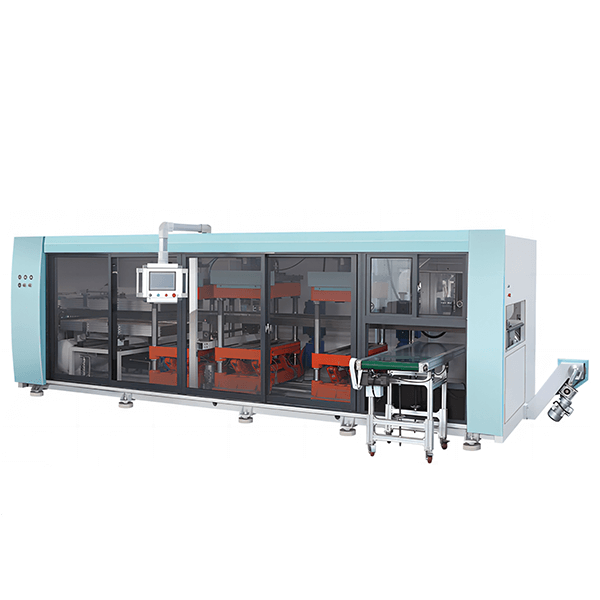
A three-station thermoforming machine is a type of equipment designed to shape plastic sheets into specific forms by heating and molding the material. This machine features three distinct stations where separate processes occur sequentially, improving workflow and overall cycle time. These stations typically include:
Heating Station: Where the plastic sheet is heated to its forming temperature.
Forming Station: Where the heated plastic is molded into the desired shape using a mold.
Trimming Station: Where the formed plastic parts are trimmed and separated from the excess sheet material.
Key Features of Three-Station Thermoforming Machines
Compact Design: With only three operational stations, these machines tend to have a smaller footprint, which is advantageous for facilities with limited space.
Simplified Workflow: The straightforward three-step process reduces complexity in machine operation and maintenance.
Moderate Production Speed: While efficient, the three-station process can be slower compared to machines with additional stations due to fewer simultaneous operations.
Cost-Effectiveness: Generally, three-station machines have lower upfront and maintenance costs, making them attractive for small to medium-scale production.
Applications of Three-Station Thermoforming Machines
The three-station design is particularly suited for manufacturers who prioritize flexibility and cost savings over extremely high output. Typical applications include:
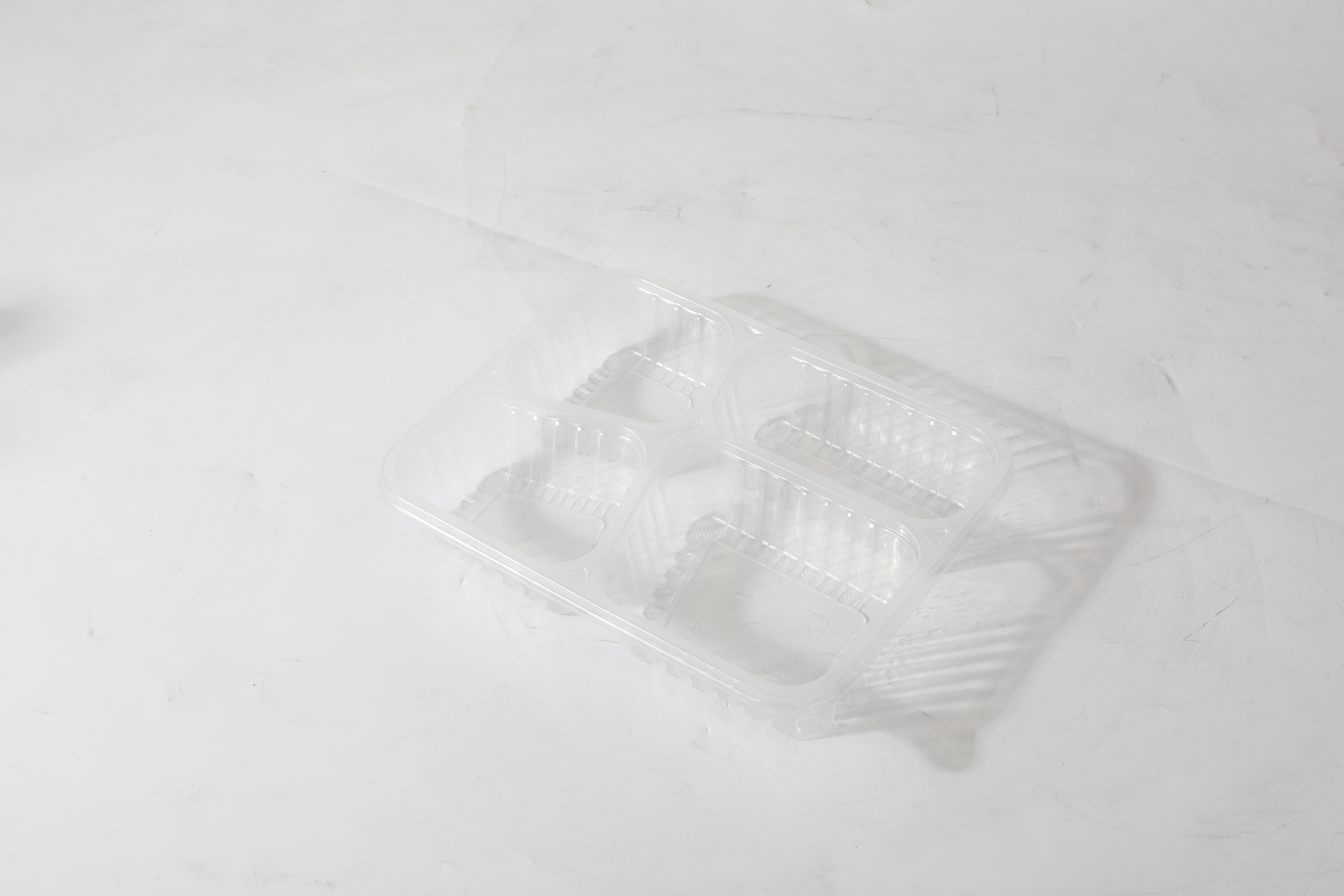
Food packaging (trays, containers)
Medical device packaging
Disposable consumer products
Custom small batch production
Latest Innovations and Trends
Modern three-station thermoforming machines are increasingly incorporating advanced features such as:
Servo-driven mechanisms for precise control and energy efficiency.
Automated trimming systems that enhance consistency and reduce labor costs.
Integration with Industry 4.0 for real-time monitoring and predictive maintenance.
These improvements help keep three-station machines relevant in a competitive market while addressing evolving manufacturing needs.
What is Four-Station Thermoforming Machine
The four-station thermoforming machine adds an additional stage to the process, allowing for even greater efficiency and throughput. Typically, the four stations include:
Heating Station
Forming Station
Trimming Station
Stacking or Delivery Station: Where the finished parts are stacked, packaged, or delivered for further processing.
Key Features of Four-Station Thermoforming Machines
Higher Throughput: By adding a fourth station, these machines allow some operations to overlap, significantly improving production speed.
Enhanced Automation: The additional station often incorporates automated stacking or delivery systems that reduce manual handling.
Increased Complexity: With more moving parts and operations, four-station machines can require more sophisticated maintenance and operator training.
Larger Footprint: These machines generally occupy more floor space due to the extra station.
Applications of Four-Station Thermoforming Machines
Manufacturers aiming for high-volume production and automation benefits often choose four-station machines. Common industries and products include:
Automotive parts manufacturing
Industrial packaging
Large-scale food and beverage packaging
Electronics casing production
Recent Technological Advances
The four-station thermoforming machine sector has seen several technological enhancements, such as:
Use of robotic arms in the delivery station for precise stacking.
Smart sensors for quality control during forming and trimming.
Integration with automated material feeding systems to reduce downtime.
These advancements are pushing the boundaries of productivity and quality control in thermoforming operations.
Three-Station vs. Four-Station Thermoforming Machine
A thorough comparison between the three-station thermoforming machine and the four-station thermoforming machine reveals several critical differences that impact manufacturing decisions. Below is a detailed table summarizing these differences:
| Feature | Three-Station Thermoforming Machine | Four-Station Thermoforming Machine |
| Number of Operational Stations | 3 (Heating, Forming, Trimming) | 4 (Heating, Forming, Trimming, Stacking/Delivery) |
| Production Speed | Moderate | High |
| Machine Footprint | Smaller, more compact | Larger, requires more space |
| Automation Level | Basic to moderate | Advanced with automated stacking/delivery |
| Maintenance Complexity | Lower, simpler mechanism | Higher, more complex parts and operations |
| Initial Investment Cost | Lower | Higher |
| Best Suited For | Small to medium batch production | High-volume industrial production |
| Flexibility | High, easier to change molds and setups | Moderate, designed for consistent high output |
| Integration with Industry 4.0 | Available with modern upgrades | More commonly integrated |
| Energy Consumption | Generally lower due to fewer operations | Potentially higher but offset by increased output |
Data Analysis: Productivity and Cost
When analyzing the productivity data between these machines, the four-station thermoforming machine can increase output by approximately 25-40% compared to the three-station model, depending on product complexity and material type. However, this productivity gain often comes with a 30-50% higher upfront investment and increased operational costs.
Product Quality and Consistency
Both machines can deliver high-quality products, but the four-station thermoforming machine often achieves better consistency due to integrated automated handling and stacking processes, reducing human error.
Industry Trends Influencing Choice
Recent market trends indicate a growing demand for:
Sustainable packaging: Machines that support recyclable materials and minimize waste.
Customization: Flexible machines that can adapt to small batch sizes.
Automation and Smart Manufacturing: Integration with digital platforms to optimize production.
These trends have led some manufacturers to prefer three-station thermoforming machines for flexibility and cost-effectiveness, while others lean toward four-station machines for automation and scale.
Conclusion
Selecting between a three-station thermoforming machine and a four-station thermoforming machine hinges on several factors including production volume, budget, facility space, and automation needs. The three-station machine excels in cost efficiency, flexibility, and simplicity, making it ideal for small to medium batch operations or businesses just entering the thermoforming market. On the other hand, the four-station machine is better suited for manufacturers targeting high-volume, automated production with greater throughput and consistent product quality.
Emerging technologies and market demands are continually reshaping the capabilities of both machine types. Manufacturers must evaluate their current needs alongside future growth projections to choose the best thermoforming solution. Understanding the nuances between these machines allows businesses to optimize manufacturing processes, reduce costs, and maintain competitiveness in a fast-evolving industrial landscape.
FAQs
Q1: What factors should I consider when choosing between a three-station and a four-station thermoforming machine?
A: Consider production volume, available factory space, budget, required automation level, and product complexity. For lower volumes and tighter budgets, a three-station machine is preferable. For high throughput and automation, opt for a four-station machine.
Q2: Are four-station thermoforming machines more expensive to maintain?
A: Generally, yes. The increased complexity and additional mechanical components require more frequent maintenance and skilled operators.
Q3: Can a three-station thermoforming machine handle large production runs?
A: While it can manage moderate production runs, it may not be as efficient as a four-station machine for very high-volume manufacturing.