
Ever wondered how everyday plastic items are shaped with precision and efficiency? Thermoforming machines play a crucial role in this process. At the heart of these machines lies the programmable logic controller (PLC), a key component in industrial automation. In this post, you'll learn about thermoforming machines, the role of PLCs in industrial settings, and why they're vital for thermoforming operations.
Understanding PLC: The Backbone of Automation
Definition and Functionality of PLC
A Programmable Logic Controller (PLC) is a specialized digital computer used in industrial environments to automate machinery and processes. It stores instructions in a programmable memory to perform tasks like logical operations, sequencing, timing, counting, and arithmetic calculations. These tasks control mechanical equipment or production lines by managing digital or analog inputs and outputs.
PLCs act like the brain of automation systems: they continuously monitor input signals from sensors or switches and respond by activating outputs such as motors, valves, or alarms. This real-time processing ensures precise control over complex industrial operations.
Key Features of PLC Systems
PLCs offer several important features that make them ideal for industrial automation:
High Reliability: Built with microcontrollers and protective circuits, PLCs can operate continuously under harsh conditions with minimal failure.
Easy Programming: Most PLCs use ladder logic diagrams or simple command statements that resemble electrical relay logic. This makes programming accessible even without advanced computer skills.
Flexible Configuration: Modular designs allow users to expand or customize PLC systems by adding input/output modules or communication interfaces as needed.
Comprehensive I/O Support: PLCs can handle a wide range of signal types—digital, analog, voltage, current—allowing direct connection to various sensors, actuators, and devices.
Fast Execution: PLCs process instructions quickly, often faster than traditional relay systems, enabling precise timing and synchronization.
Simple Installation: Unlike complex computer systems, PLCs require minimal environmental controls and can be installed directly on the factory floor.
Types of PLCs Used in Thermoforming
Thermoforming machines require precise and reliable control, which different types of PLCs can provide depending on the application scale and complexity:
Fixed Integrated PLCs: These compact units combine the CPU and I/O in one device. They are cost-effective for smaller thermoforming setups with limited control points but offer less flexibility.
Modular PLCs: Featuring separate CPU and I/O modules, these systems allow easy expansion and customization. They suit larger thermoforming lines needing intricate control of heating zones, vacuum systems, and mold movements.
Distributed PLCs: These systems connect multiple controllers and I/O modules over a network, enabling control across large or multi-station thermoforming facilities.
Soft PLCs: Implemented via software on standard computers, soft PLCs offer high flexibility and integration with advanced data processing but may require more robust hardware and security measures.
Each type supports the core functions necessary for thermoforming: controlling heaters, vacuum pumps, motors, and sensors to ensure consistent product quality and efficient operation.
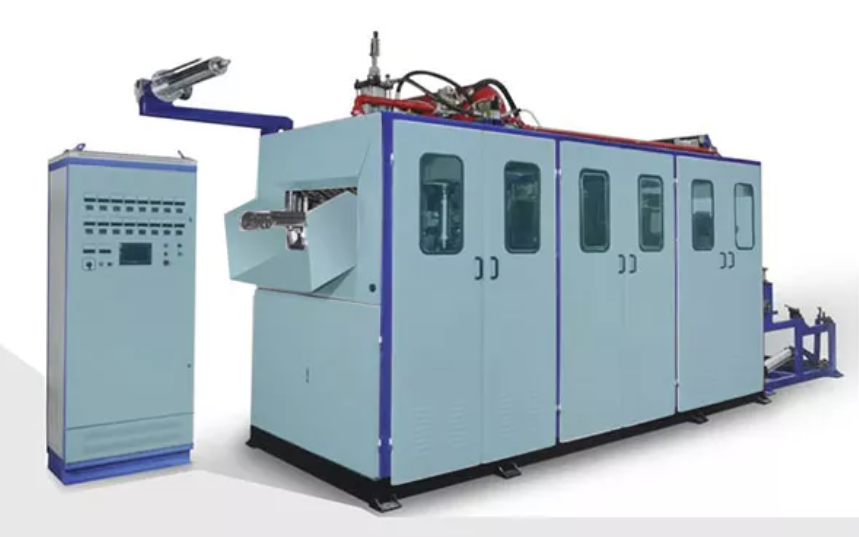
The Role of PLC in Thermoforming Machines
Precision and Reliability in Thermoforming
In thermoforming machines, precision is key. A Programmable Logic Controller (PLC) ensures exact control over temperature, timing, and pressure during the forming process. It monitors sensors that track material heat and vacuum levels, adjusting operations in real time. This tight control helps produce consistent, high-quality products without defects like warping or incomplete forming.
PLCs offer exceptional reliability. Unlike manual controls or relay systems, they operate continuously under tough industrial conditions without frequent failures. Their built-in diagnostics and self-checks detect faults early, minimizing downtime. This reliability is crucial for thermoforming machines, where even minor disruptions can cause costly production delays or material waste.
Automation and Process Optimization
Automation through PLCs transforms thermoforming operations. The controller sequences complex steps—heating, forming, cooling, and trimming—automatically and precisely. It eliminates human error and speeds up cycle times, improving overall throughput.
Moreover, PLCs optimize processes by collecting data from various sensors and actuators. They adjust parameters dynamically based on real-time feedback. For example, if the temperature drifts, the PLC can modify heating element power immediately to maintain ideal conditions. This adaptability reduces energy consumption and material scrap, enhancing efficiency.
PLC programming also allows easy customization for different product types or molds. Operators can switch recipes quickly without manual recalibration, supporting flexible manufacturing and reducing setup times.
Real-world Applications and Benefits
Many thermoforming manufacturers rely on PLCs for improved performance. For instance, a food packaging company uses PLC-controlled thermoforming lines to produce trays with precise dimensions and consistent sealing quality. The PLC manages vacuum pumps and heaters, ensuring every tray meets strict hygiene and strength standards.
Another example involves automotive parts production, where PLCs coordinate multi-zone heating and robotic trimming. This results in faster cycles and less material waste, lowering costs.
Benefits of using PLCs in thermoforming include:
Consistent product quality: Precise control limits defects and rejects.
Reduced downtime: Early fault detection and diagnostics speed repairs.
Energy savings: Dynamic adjustments optimize power use.
Increased productivity: Automated sequences speed operations.
Flexibility: Quick recipe changes support diverse product runs.
Improved safety: Automated controls reduce operator exposure to hazards.
Overall, PLCs are the heart of modern thermoforming machines, enabling smart, efficient, and reliable manufacturing processes that meet today’s demanding production standards.
Integrating PLCs with Advanced Software Platforms
Benefits of Integrating PLCs with Ignition
Integrating PLCs with advanced software platforms like Ignition brings a new level of control and insight to thermoforming machines. Ignition acts as a powerful SCADA (Supervisory Control and Data Acquisition) system, connecting directly to PLCs and gathering data in real time. This connection lets operators monitor machine status, temperatures, pressures, and cycle counts from a centralized, user-friendly interface.
The benefits include:
Real-time Monitoring: Operators see current machine conditions instantly, enabling quick responses to any issues.
Data Consolidation: Ignition can connect to multiple PLCs from different manufacturers, unifying data streams into one platform.
Process Optimization: With detailed data, manufacturers can analyze trends, adjust parameters, and reduce waste or energy use.
Remote Access: Supervisors and technicians can access system data from anywhere, improving troubleshooting and reducing downtime.
Alarm Management: Automated alerts notify staff of parameter deviations, preventing defects or equipment damage.
Historical Data Logging: Data archives support quality control, reporting, and predictive maintenance efforts.
This integration transforms a basic PLC-controlled thermoforming machine into a smart, connected system that supports data-driven decisions and continuous improvement.
Step-by-Step Guide to Integration
To integrate PLCs with Ignition effectively, follow these key steps:
Select Communication Protocol: Choose a protocol compatible with your PLCs and network, such as Ethernet/IP, Modbus TCP, or Profinet.
Configure PLC Network Settings: Assign static IP addresses to PLCs and ensure they are reachable on the plant network.
Set Up PLC Communication: Use the PLC programming environment to enable and configure the chosen protocol.
Add Devices in Ignition: In Ignition Gateway, add each PLC as a device using the appropriate driver (e.g., Siemens S7, Allen-Bradley Logix).
Test Connectivity: Verify communication by subscribing to key tags like temperature, vacuum pressure, and cycle status.
Build Dashboards: Design Ignition screens to visualize process data in real time, including trends and alarms.
Implement Alarming: Configure alerts for critical parameters to notify operators immediately.
Secure the System: Enable encryption and user authentication to protect data and control access.
Train Operators: Educate staff on using Ignition interfaces and responding to alerts.
Following these steps ensures a robust, secure, and efficient integration that maximizes the benefits of combining PLCs and Ignition.
Enhancing Efficiency through Real-time Data Visualization
One of Ignition’s greatest strengths is turning raw PLC data into clear, actionable visualizations. Dashboards display temperatures, pressures, and cycle times, making it easy for operators to spot anomalies. For example, a temperature graph might reveal a heating zone drifting out of range before it affects product quality.
Real-time visualization helps reduce scrap by enabling swift corrective actions. Automated alarms can trigger messages or notifications, so maintenance teams respond before a fault causes downtime.
Additionally, Ignition’s historical data logging supports root cause analysis. By reviewing past trends, engineers identify recurring issues or opportunities to optimize process parameters, reducing energy consumption and material waste.
Interactive dashboards also provide key performance indicators (KPIs) such as machine uptime, cycle efficiency, and fault frequency. Managers use these insights to improve scheduling, maintenance planning, and overall equipment effectiveness (OEE).
In short, integrating PLCs with Ignition empowers thermoforming operations through transparency, faster decision-making, and continuous process improvement.
Maintaining PLC Systems for Optimal Performance
Importance of Regular Maintenance
Keeping a PLC system in good shape is critical for smooth, reliable thermoforming machine operation. PLCs control essential tasks like heating, vacuum pressure, and cycle timing. Any failure or glitch can halt production, cause defects, or damage equipment. Regular maintenance prevents unexpected breakdowns and costly downtime.
PLCs operate in tough industrial environments where dust, vibration, humidity, and electrical noise can affect components. Over time, connectors loosen, sensors drift, or memory errors occur. Without routine checks, small issues can escalate into major problems. Maintenance ensures the PLC and its connected devices perform accurately and consistently.
Moreover, preventive care extends the life of the PLC hardware and reduces repair costs. It also helps maintain product quality by keeping control parameters stable. Since PLCs often run complex programs, verifying software integrity during maintenance avoids logic errors or corrupted data.
PLC Maintenance Checklist
A thorough maintenance routine covers hardware, software, and environmental factors. Here’s a practical checklist to follow:
Backup PLC Programs: Regularly save the latest control logic and configuration to prevent data loss.
Inspect Connections: Check all wiring, terminals, and connectors for tightness and corrosion, especially in high-vibration areas.
Examine LED Indicators: Verify status lights on the CPU and I/O modules to detect faults early.
Clean Components: Remove dust and debris from the PLC enclosure, ventilation filters, and circuit boards.
Check Battery Health: Replace backup batteries that preserve program memory during power outages.
Test Input/Output Devices: Confirm sensors, switches, and actuators respond correctly and calibrate if needed.
Monitor Environmental Conditions: Ensure temperature and humidity remain within manufacturer specifications.
Review Error Logs: Analyze PLC diagnostic history for recurring faults or unusual events.
Update Software: Apply firmware patches or program updates to fix bugs or improve performance.
Maintain Spare Parts Inventory: Keep critical modules and components ready to minimize downtime during replacements.
Common Issues and Troubleshooting Tips
Even with good maintenance, PLC systems may face occasional problems. Recognizing symptoms and acting fast helps reduce impact.
Communication Failures: Loss of connection between PLC and devices can stem from loose cables or network issues. Check wiring and network settings first.
Power Supply Problems: Voltage drops or spikes can cause resets or erratic behavior. Use surge protectors and stable power sources.
Sensor Malfunctions: Faulty sensors give incorrect data, leading to process errors. Test sensors individually and replace if faulty.
Memory Corruption: Unexpected power loss might corrupt PLC memory. Regular backups and battery checks mitigate this risk.
Overheating: Excess heat damages components. Improve ventilation or relocate PLC away from heat sources.
Software Bugs: Logic errors cause unexpected outputs or machine stops. Debug programs and restore previous stable versions if needed.
Electromagnetic Interference (EMI): Nearby heavy machinery or radio signals can disrupt signals. Use shielded cables and proper grounding.
By following a structured maintenance plan and troubleshooting promptly, operators ensure PLC systems run reliably, supporting efficient thermoforming production.
Future Trends in PLC Technology for Thermoforming
Emerging Technologies and Innovations
PLCs keep evolving, bringing new tech into thermoforming machines. One big trend is the rise of edge computing. Instead of sending all data to a central server, PLCs process information right on the machine. This means faster decisions and less network load, which is perfect for real-time control in thermoforming. Also, AI and machine learning are starting to blend with PLCs. They help predict machine faults or optimize heating cycles by learning from past data, reducing downtime and scrap rates.
Another innovation is the move toward wireless communication. Modern PLCs can connect to sensors and actuators without cables, making installations simpler and more flexible. This helps especially in large or complex thermoforming lines, where wiring can get messy and expensive.
Plus, modular and scalable PLC systems are becoming smarter. They let manufacturers add new functions or expand control points easily as production needs grow. This flexibility supports customized thermoforming products and faster changeovers.
Impact on Sustainability and Energy Efficiency
New PLC tech plays a big role in making thermoforming greener. By using real-time data and smart algorithms, PLCs can optimize energy use during heating and forming. For example, they adjust heater power precisely, avoiding wasteful overheating. This saves electricity and cuts costs.
PLCs also help reduce material waste. They monitor forming pressure and cycle timing closely, catching issues early before defective parts are made. This means fewer scraps and less raw material used.
Moreover, integrating PLCs with energy management systems allows factories to track power consumption across machines. They can identify energy hogs and schedule operations during off-peak hours, lowering environmental impact.
Finally, PLCs support predictive maintenance, which prevents unexpected breakdowns. Keeping machines running smoothly avoids emergency repairs that consume excess resources. Overall, these advances help thermoforming plants meet stricter environmental regulations and sustainability goals.
Predictions for Future Developments
Looking ahead, PLCs will become even more connected and intelligent. Expect to see tighter integration with Industrial Internet of Things (IIoT) platforms, enabling seamless data flow from machines to cloud analytics. This will unlock deeper insights into process performance and product quality.
We’ll also likely witness more open-source and standardized communication protocols, making it easier to mix PLCs from different brands. This interoperability will reduce costs and simplify system upgrades.
Another prediction is the growth of soft PLCs running on powerful industrial PCs or edge devices. These offer more computing power and easier software updates than traditional hardware PLCs, supporting complex thermoforming tasks.
Finally, user interfaces will improve with augmented reality (AR) and virtual reality (VR) tools. Operators may use AR glasses to visualize machine status or get step-by-step maintenance instructions, enhancing efficiency and safety.
Together, these trends point to smarter, more sustainable, and highly adaptable thermoforming machines powered by next-gen PLC technology.
Conclusion
PLCs are crucial for thermoforming machines, ensuring precision, reliability, and efficiency. They automate processes, reducing errors and waste. As automation advances, PLCs enhance production quality and energy savings. Wenzhou Yicai Machinery Technology Co.LTD. offers cutting-edge thermoforming solutions. Their products integrate advanced PLC technology, providing exceptional value through improved performance and sustainability. Explore their offerings to optimize your manufacturing processes and achieve high standards in production efficiency.
FAQ
Q: What is a PLC?
A: A Programmable Logic Controller (PLC) is a digital computer used in industrial automation to control machinery and processes.
Q: How do PLCs benefit thermoforming machines?
A: PLCs provide precise control, enhance reliability, and automate processes, improving product quality and efficiency in thermoforming machines.
Q: What are the types of PLCs used in thermoforming?
A: Types include Fixed Integrated, Modular, Distributed, and Soft PLCs, each offering different levels of flexibility and control.
Q: How does integrating PLCs with Ignition improve operations?
A: It enables real-time monitoring, data consolidation, remote access, and process optimization for thermoforming machines.


