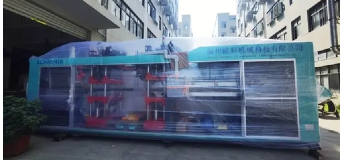
In plastic thermoforming, the process of removing the formed part from the mold, known as demolding, is just as critical as the heating, forming, and cooling stages. Poor demolding can lead to a variety of issues, such as deformed parts, stuck components, increased scrap rates, and higher production costs. Identifying the root causes of poor demolding and implementing solutions is essential to ensuring smooth production, minimal waste, and high-quality products.
This article will explore the common causes of poor demolding in thermoforming machines, as well as provide effective solutions for each issue.
What Is Poor Demolding?
In thermoforming, the plastic sheet is heated until it becomes pliable, then it is formed over or into a mold by vacuum, pressure, or both. After forming and cooling, the part is removed from the mold. When the part is difficult to remove, gets stuck, or is damaged during removal, it is referred to as "poor demolding." This problem can lead to defects in the part, increased cycle times, and the need for additional labor or machine intervention.
Common Causes of Poor Demolding
1. Insufficient Mold Draft Angle
What It Means: The mold’s walls or surfaces do not have a sufficient taper or draft angle. The draft angle allows the formed part to slide out of the mold with minimal resistance.
Why It Causes Issues: If the draft angle is too shallow or non-existent, the formed part will cling to the mold walls due to friction. As a result, the part may get stuck or require excessive force to eject, leading to deformation, surface damage, or breakage.
Particularly Problematic When: The part has deep features, intricate details, or a complex shape that makes it difficult to eject without a draft.
Solution: Increase the draft angle (typically between 3° and 5°, depending on part complexity). This will reduce friction and make it easier for the part to release from the mold without damaging it.
2. Rough or Poorly Finished Mold Surface
What It Means: The mold surface is rough, scratched, or worn, which increases friction between the mold and the plastic part.
Why It Causes Issues: A rough mold surface creates more resistance during the demolding process, making it harder to eject the part. This can result in parts sticking, tearing, or getting damaged during ejection.
Particularly Problematic When: The parts have delicate surfaces, such as thin walls or embossed features, that are prone to scratching or damage.
Solution: Ensure that the mold surface is smooth and well-maintained. Regular polishing, maintenance, and coating of the mold can reduce friction and improve the ease of demolding. Additionally, consider using non-stick coatings or lubricants to aid the demolding process.
3. Improper Mold Temperature or Poor Thermal Control
What It Means: The mold is either too hot or too cold, or the temperature is not evenly distributed across the mold.
Why It Causes Issues: If the mold is too hot, the plastic part may remain too soft when ejected, leading to deformation or sticking. If the mold is too cold, the plastic part may "freeze" onto the mold surface, making it difficult to remove. Uneven temperatures can cause parts to cool and solidify unevenly, resulting in parts that are harder to eject.
Particularly Problematic When: The parts are large or have intricate details that require uniform cooling to prevent warping or sticking.
Solution: Ensure consistent and uniform mold temperature by using effective cooling systems, such as water-cooled molds or air cooling. The mold temperature should be carefully controlled based on the material being used. Avoid abrupt temperature changes that can cause thermal shock to the plastic or mold.
4. Inadequate Process Parameters (Heating, Cooling, Vacuum, Timing)
What It Means: The thermoforming machine’s settings (e.g., heating temperature, vacuum strength, cooling time, cycle time) are not properly optimized for the material, mold, or part geometry.
Why It Causes Issues: If the heating temperature is too high or low, the plastic may not form properly, leading to incomplete or uneven parts. If the vacuum pressure is insufficient, the plastic may not fully conform to the mold, leading to areas that cling to the mold or do not fully release. Similarly, improper cooling or timing can cause parts to be too soft or too rigid at the time of demolding, making ejection difficult.
Particularly Problematic When: The machine settings are not calibrated for specific materials, part complexity, or desired outcomes.
Solution: Carefully adjust and monitor process parameters for each material and part design. Ensure that the plastic is heated to the correct temperature, the vacuum pressure is balanced across the mold, and the cooling time is sufficient to allow for proper solidification. Using programmable logic controllers (PLCs) to fine-tune these settings can lead to better consistency and easier demolding.
5. Mold Damage, Wear, or Degradation
What It Means: Over time, the mold can become worn, scratched, corroded, or otherwise degraded. This is common in high-volume production, where frequent cycles and thermal stresses take a toll on the mold.
Why It Causes Issues: Mold wear increases friction and reduces the mold’s ability to release the part smoothly. If the mold surface is damaged or uneven, the part may stick or get damaged during ejection.
Particularly Problematic When: The mold has been in use for an extended period without proper maintenance, or when dealing with high-volume production of parts that require precise tolerances.
Solution: Regularly inspect and maintain molds to ensure they are in good condition. This includes cleaning, polishing, and replacing worn parts, as well as checking for cracks or deformation. Scheduled maintenance and timely mold repair or replacement are essential for preventing demolding problems.
6. Inadequate Ejection or Demolding Mechanisms
What It Means: The method used to eject the part from the mold is either ineffective or poorly timed. This could include insufficient use of air jets, ejector pins, or other mechanical systems.
Why It Causes Issues: If the part is not ejected properly, it may remain stuck in the mold or get damaged during the removal process. Inadequate ejection force or incorrect timing may also lead to parts being ejected too early or too late, causing deformation or additional strain on the mold.
Particularly Problematic When: The part has intricate features, delicate edges, or is made of soft materials that require gentle handling during ejection.
Solution: Use effective ejection mechanisms such as air jets, ejector pins, or vacuum-assisted systems. Ensure that the ejection force is evenly distributed across all parts of the mold to prevent damage. Also, consider adding auxiliary systems, like gas-assist or automated post-ejection handling, to improve the efficiency and consistency of the demolding process.
7. Complex Part Geometry (Thin Walls, Deep Draws, Textured Features)
What It Means: Parts with thin walls, deep draws, textured features, or undercuts are more challenging to eject because of the complex mold geometry.
Why It Causes Issues: Thin walls and deep draws cause uneven material distribution during forming, which can lead to parts sticking or warping. Textured surfaces create more contact areas between the part and the mold, increasing adhesion and friction. Undercuts may physically lock the part into the mold, requiring complex ejection mechanisms.
Particularly Problematic When: The part has intricate designs or is made of materials that are more prone to sticking or deforming during ejection.
Solution: For parts with complex geometry, ensure that the mold is designed with sufficient draft angles, smooth surfaces, and proper venting. Consider using mold features such as collapsible cores, side actions, or flexible materials to facilitate easier demolding. Additionally, allow adequate cooling time for the part to solidify and shrink evenly before attempting ejection.
Best Practices for Preventing Poor Demolding
To prevent poor demolding issues from arising, here are some best practices:
Regular Mold Maintenance: Keep molds clean, polished, and free from damage. Inspect molds regularly for signs of wear or corrosion.
Optimize Process Parameters: Fine-tune heating, vacuum, and cooling settings to suit the specific material and part geometry.
Use the Right Materials: Choose materials that are appropriate for the mold design and part requirements. Some materials may require special consideration for demolding.
Adjust Ejection Mechanisms: Ensure that the mold is equipped with sufficient ejection support and that the timing is correct to avoid part damage.
Design for Demolding: Ensure that the part design includes adequate draft angles, smooth contours, and features that facilitate easy release from the mold.
Conclusion
Poor demolding in thermoforming can lead to a range of issues, from production delays and defective parts to higher scrap rates and costly machine downtime. By understanding the common causes of demolding problems, such as insufficient mold draft, rough surfaces, inadequate thermal control, or poor process parameters, manufacturers can implement solutions that improve the demolding process and overall efficiency.
Regular maintenance of molds, optimization of process settings, and careful design of the part and mold geometry are key factors in preventing demolding issues. With the right precautions and adjustments, manufacturers can ensure smooth, reliable operation of their thermoforming machines and produce high-quality parts with minimal waste.
If you have any questions, please contact us via email or telephone and we will get back to you as soon as possible.